Introduction
Modern evenings are often filled with phones, social media, emails, streaming, games, and endless scrolling. Even after work or school is finished, the mind may stay busy because another notification is always waiting.
An offline evening routine gives you a simple way to disconnect from digital life before sleep.
So, how do you create an offline evening routine?
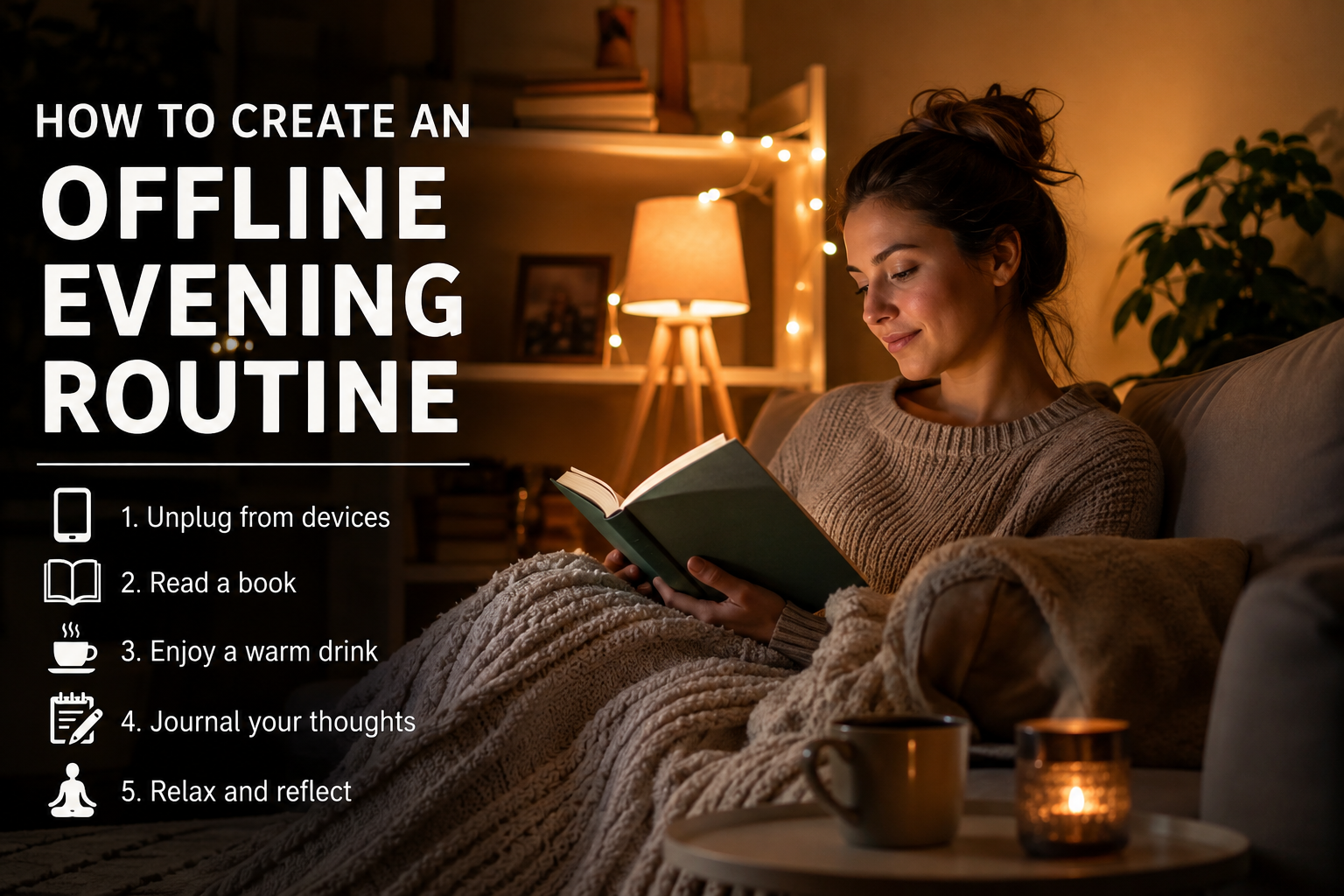
The easiest method is to choose a fixed time to put away your phone, computer, tablet, and television. Then spend the last 30 to 60 minutes of your evening doing calm offline activities such as reading, preparing for tomorrow, stretching, writing in a journal, talking with family, or simply relaxing.
The CDC recommends turning off electronic devices at least 30 minutes before bedtime. NIH sleep guidance also recommends using the hour before bed for quiet activities and limiting bright artificial light.
What Is an Offline Evening Routine?
An offline evening routine is a set of activities you do near the end of your day without depending on your phone, social media, television, laptop, or other screens.
It does not mean you must completely remove technology from your life.
Instead, you create a clear stopping point for digital activity and give yourself some quieter time before sleep.
For example, instead of spending your final hour scrolling through short videos, you could:
- Take a shower
- Prepare your clothes for tomorrow
- Read a paper book
- Write tomorrow’s tasks on paper
- Stretch gently
- Talk with your family
- Make a caffeine-free drink
- Practice a relaxing hobby
- Prepare your bedroom for sleep
The goal is simple: finish the day more calmly instead of carrying online activity directly into bed.
Why Create an Offline Evening Routine?
A structured evening routine can help create a clearer transition between the busy part of your day and bedtime.
Health organizations recommend several habits that fit naturally into an offline routine, including maintaining regular sleep and wake times, creating a relaxing sleep environment, reducing evening screen exposure, and avoiding caffeine late in the day.
Screens are not the only issue. What you do on them can also keep your attention active.
Messages, work emails, breaking news, games, videos, and social media can make it tempting to stay online longer than planned.
Setting a specific “screens off” time can therefore create a useful boundary between digital activity and sleep preparation. Sleep Foundation guidance similarly recommends consistent screens-off and lights-out times as part of a bedtime routine.
How to Create an Offline Evening Routine Step by Step
1. Choose a Digital Shutdown Time
Start by deciding when your online day will end.
You do not need to make the change extreme.
If you normally sleep at 11:00 PM, for example, you might put your devices away at 10:00 or 10:30 PM.
The CDC recommends switching off electronic devices at least 30 minutes before bedtime, while NIH guidance suggests using the hour before bed for quiet time and avoiding bright artificial light from devices such as televisions and computers.
Choose a time you can realistically follow every night.
Consistency is more useful than creating a complicated routine that you abandon after two days.
2. Put Your Phone Away
Turning off an app does not always stop the temptation to check it again.
Create some physical distance instead.
You could:
- Leave your phone on a desk
- Put it across the room
- Charge it outside the bedroom
- Switch on Do Not Disturb
- Use a traditional alarm clock instead of your phone
The purpose is to make checking your phone a deliberate choice instead of an automatic habit.
3. Lower the Stimulation Around You
Your offline routine should feel different from the busiest part of your day.
Lower unnecessary noise.
Reduce bright lighting where practical.
Stop checking work.
Finish important online tasks before your shutdown time.
CDC and NIH guidance recommends a quiet, relaxing sleep environment and limiting bright light near bedtime.
You are creating a signal that the active part of the day is ending.
4. Complete Tomorrow’s Small Tasks
Many people stay mentally busy at night because they are thinking about everything they need to do tomorrow.
Handle a few small tasks before bed.
For example:
- Choose tomorrow’s clothes
- Pack your work or school bag
- Put your keys in their usual place
- Prepare a simple breakfast plan
- Write your top three tasks for tomorrow
Writing tasks on paper can also stop you from opening your phone just to check your calendar or notes.
Do not turn this into another hour of work.
Ten minutes may be enough.
5. Choose One Relaxing Offline Activity
You do not need seven different evening habits.
Start with one activity you genuinely enjoy.
Good options include:
Reading: Choose a physical book, magazine, or newspaper.
Journaling: Write a few sentences about your day.
Drawing: Sketching or coloring can provide a simple screen-free activity.
Puzzles: Try a crossword, Sudoku, or jigsaw puzzle.
Music: Listen without simultaneously scrolling through your phone.
Conversation: Spend a few quiet minutes talking with your partner, children, parents, or housemates.
Gentle stretching: Use movements you already know rather than following a phone video.
The best activity is one that is calm enough to become part of your regular evening.
6. Be Careful With Evening Caffeine
An offline evening routine is not only about screens.
What you drink can matter too.
The CDC advises avoiding caffeine in the afternoon or evening, and NIH sleep guidance also recommends avoiding caffeine close to bedtime.
Coffee is the obvious example, but caffeine can also appear in some teas, energy drinks, soft drinks, chocolate, and certain products.
If you enjoy a warm evening drink, choose one that does not contain caffeine.
7. Avoid Turning Bedtime Into a Heavy Meal
Try not to make a large meal the final activity before sleeping.
CDC guidance recommends avoiding large meals before bedtime, while NIH guidance advises avoiding heavy or large meals within a few hours of bed.
If you are genuinely hungry, your choices will depend on your diet and personal needs, but the general idea is to avoid turning late evening into another large eating session.
8. Prepare Your Bedroom
Your bedroom should support the final stage of your evening routine.
Before getting into bed:
- Make the room comfortable
- Reduce unnecessary light
- Keep distracting devices away
- Adjust the temperature if needed
- Finish brushing your teeth and washing your face
- Put tomorrow’s essentials in place
CDC recommends keeping the bedroom quiet, relaxing, and cool, while NIH guidance also recommends a quiet, cool, dark sleeping environment.
9. Keep Your Bedtime Consistent
Your offline routine becomes easier when it has a predictable ending.
Try to go to bed and wake up at roughly consistent times.
Both CDC and NIH sleep recommendations emphasize maintaining regular sleep and wake schedules.
You do not need to follow your routine perfectly every night.
The aim is to create a normal pattern that is easy to return to.
Simple 60-Minute Offline Evening Routine
Here is an example if you want an easy starting structure.
| Time Before Bed | Activity |
|---|---|
| 60 minutes | Finish work, social media, TV, and other screens |
| 50 minutes | Prepare clothes and important items for tomorrow |
| 40 minutes | Shower, wash your face, or complete personal care |
| 30 minutes | Read, journal, stretch, or enjoy another quiet activity |
| 10 minutes | Dim lights and prepare your bedroom |
| Bedtime | Go to bed without reopening your phone |
You can shorten this to 30 minutes if one hour feels unrealistic.
A routine that you actually follow is better than an impressive routine that does not fit your life.
A 30-Minute Offline Evening Routine
If your evenings are busy, try this:
First 5 minutes: Put away your phone and prepare tomorrow’s essentials.
Next 10 minutes: Wash up, brush your teeth, and change into comfortable clothes.
Next 10 minutes: Read a physical book or write in a journal.
Final 5 minutes: Make the bedroom quiet and comfortable and prepare to sleep.
This approach also reaches the CDC’s recommendation of turning off electronic devices at least 30 minutes before bedtime.
What Should You Avoid During an Offline Evening?
The biggest mistake is replacing one highly stimulating activity with another.
Try to limit:
- Repeatedly checking your phone
- Work emails in bed
- Endless social-media scrolling
- Watching videos until you fall asleep
- Very bright lighting
- Large late-night meals
- Late caffeine
- Turning your routine into another productivity challenge
NIH guidance recommends quiet time before bed and avoiding intense exercise and bright artificial light during the hour before sleep.
Your routine should reduce demands, not create more of them.
How to Make the Routine Easier to Maintain
Start small.
Do not suddenly decide that you will spend three hours without technology every evening if you normally use your phone until you fall asleep.
Begin with 30 minutes.
Once that feels normal, you can increase the offline period if you enjoy it.
It also helps to keep offline alternatives where you can see them.
Place a book beside your bed.
Leave a notebook and pen on your desk.
Keep a puzzle nearby.
Prepare your evening drink before putting your phone away.
Removing one habit is much easier when you already know what will replace it.
What If You Need Your Phone at Night?
An offline evening routine does not require pretending technology does not exist.
Some people need to remain available for family, children, work emergencies, medical reasons, or other important situations.
You can still reduce unnecessary use.
For example, allow phone calls from selected contacts while muting social media and other notifications.
The goal is not perfection.
It is intentional use.
Does an Offline Routine Mean No TV?
If you want a fully offline routine, television would normally be included in your screens-off period.
However, you can create the routine gradually.
You might begin by removing your phone from the last 30 minutes of your day.
Later, you could stop television at the same time.
CDC sleep guidance recommends turning electronic devices off at least 30 minutes before bed, while NIH recommends avoiding bright artificial light during the quiet hour before bedtime.
Offline Evening Routine Ideas
If you do not know what to do without your phone, try:
- Reading a book
- Journaling
- Drawing
- Knitting
- Doing a puzzle
- Organizing clothes
- Preparing tomorrow’s bag
- Talking with family
- Listening to calm music
- Gentle stretching
- Taking a warm shower or bath
- Practicing simple breathing or relaxation
- Writing tomorrow’s priorities on paper
NIH includes relaxation techniques and a warm bath among possible healthy pre-sleep practices.
Frequently Asked Questions
How long should an offline evening routine be?
Thirty to 60 minutes is a practical starting point. The CDC recommends turning off electronic devices at least 30 minutes before bedtime, while NIH guidance encourages quiet time during the hour before bed.
What should I do instead of scrolling at night?
Read, write, prepare for tomorrow, stretch gently, talk with family, do a puzzle, draw, or enjoy another calm activity that does not require a screen.
Should I leave my phone outside my bedroom?
You can if it is practical and safe for your situation. Another option is placing it across the room and muting unnecessary notifications.
Can reading be part of an offline routine?
Yes. A physical book or magazine is an easy screen-free activity to include before bed.
Should I stop using screens one hour before bed?
An hour can work well as a routine. Official recommendations vary in wording: CDC advises shutting down electronic devices at least 30 minutes before bed, while NIH recommends using the hour before bedtime for quiet time and avoiding bright artificial light.
Can I listen to music during an offline evening?
Yes. Listening to music can still fit the spirit of the routine if you are not actively using or scrolling through a screen.
What if I cannot follow my routine every night?
Simply restart the next evening. A routine is meant to support your life rather than make you feel that you have failed because one night was different.
Is an offline evening routine only for people with sleep problems?
No. Anyone who wants a clearer boundary between digital activity and personal evening time can create one.
Final Thoughts
Learning how to create an offline evening routine does not require throwing away your phone or completely changing your lifestyle.
Start with one simple rule:
Choose a time when your digital day ends.
Put your phone aside for at least the final 30 minutes before bed. Then replace scrolling with something quieter: reading, preparing for tomorrow, journaling, stretching, talking with family, or simply relaxing.
Keep the routine simple enough to repeat.
Over time, your evening can become less about notifications and endless content and more about creating a calm ending to your day.
For sleep specifically, the most consistent official advice is straightforward: maintain regular sleep times, create a relaxing sleep environment, limit electronic devices before bed, avoid late caffeine, and use the period before sleep for quieter activities.
