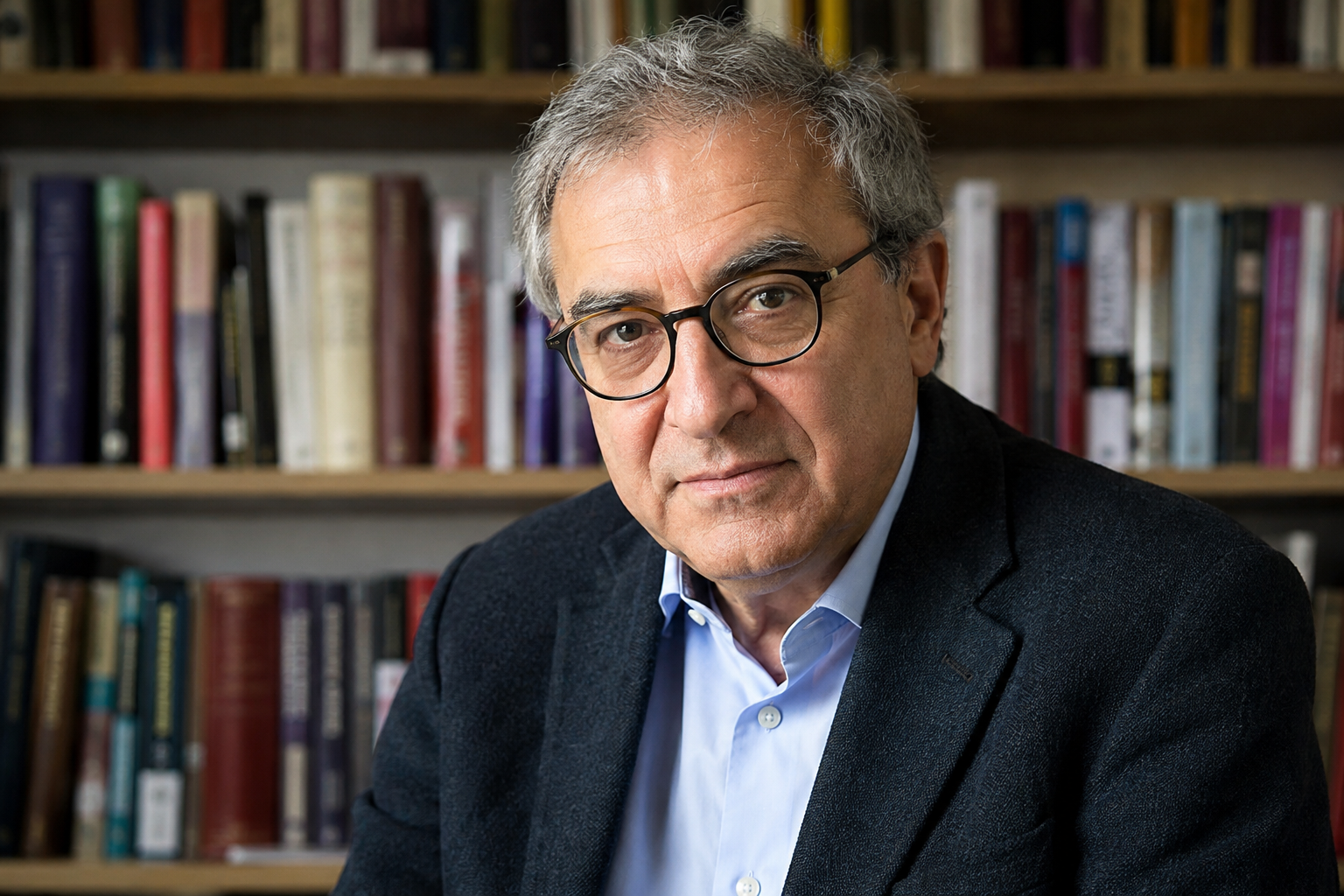
Introduction
Maurice Glasman, Baron Glasman is an English political theorist, academic, social commentator, author and Labour life peer in the House of Lords. He is best known for developing Blue Labour, a political approach that places community, work, family, faith, democratic participation, mutuality and the common good at the centre of Labour politics. His career has combined academic study with practical community organising and political activity, giving him an unusual position in modern British political debate.
Glasman has attracted both praise and criticism because his ideas challenge conventional assumptions on the political left. Supporters see him as an original thinker attempting to reconnect Labour with working people and local communities, while critics have questioned some of his positions on immigration, nationalism and social conservatism. Regardless of these disagreements, his influence on Labour’s intellectual debate has made him an important political figure.
Quick Bio
| Detail | Information |
|---|---|
| Full Name | Maurice Glasman |
| Title | Baron Glasman |
| Date of Birth | 8 March 1961 |
| Birthplace | Walthamstow, London, England |
| Nationality | British |
| Profession | Political theorist, academic, author and politician |
| Political Party | Labour Party |
| Known For | Founding Blue Labour |
| Parliamentary Role | Labour life peer |
| House | House of Lords |
| Education | Cambridge, University of York and European University Institute |
| Spouse | Catherine Glasman |
| Children | Four |
| Major Book | Blue Labour: The Politics of the Common Good |
Early Life and Family Background
Maurice Glasman was born on 8 March 1961 in Walthamstow, London, and was brought up in Palmers Green. He came from a Jewish family with strong connections to Labour politics. His family background became an important influence on his later thinking about community, work, identity, relationships and political responsibility.
His father, Coleman Glasman, was associated with Labour Zionism and operated a small toy-manufacturing business. His mother, Rivie Glasman, came from a working-class Jewish background and was a lifelong Labour supporter. These experiences exposed Glasman from an early age to the importance of family, work, political commitment and community relationships.
Education and Academic Development
Glasman attended Clapton Jewish Day School and the Jews’ Free School before continuing his education at St Catharine’s College, Cambridge, where he studied Modern History. His university education developed his interest in history, political thought and the institutions that shape society.
He later completed a master’s degree in Political Philosophy at the University of York and undertook doctoral research at the European University Institute in Florence. His academic work focused strongly on political economy and the relationship between markets, institutions and society. His doctoral research eventually contributed to his first major book, Unnecessary Suffering.
Academic Career
Glasman’s academic career developed around political theory and questions concerning citizenship, markets, community and social institutions. He became associated with London Metropolitan University and its work on political theory and faith and citizenship. His academic background helped him develop a distinctive way of analysing politics that was different from straightforward party politics.
Rather than viewing politics simply through economic statistics or electoral competition, Glasman has consistently focused on human relationships. He argues that people are shaped by families, workplaces, communities, traditions and institutions, and that political systems should recognise those relationships rather than treating individuals only as economic actors.
Community Organising and the Living Wage
A major stage in Maurice Glasman’s career came through community organising. His work with London Citizens gave him practical experience of bringing together people from different backgrounds around common concerns. This experience became extremely important to the development of his political philosophy.
Glasman worked on the Living Wage Campaign, which sought better pay for contracted workers including cleaners, cooks and security staff. He also became involved in campaigns concerning immigration, housing and community relationships. These experiences strengthened his belief that political change could be achieved through organised communities and relationships rather than depending entirely on central government.
The Rise of Blue Labour
The most important part of Glasman’s political career is his role in creating Blue Labour. The movement began around 2010 and developed as an attempt to renew Labour politics through the ideas of community, work, family, faith, reciprocity, mutuality and solidarity. Blue Labour describes itself as committed to the politics of the common good and combines radical and conservative elements within the Labour tradition.
Glasman believed that Labour had become too distant from many working-class communities. He argued that the party needed to rediscover its historic connections with trade unions, local organisations, families, faith groups and voluntary associations. His approach was not simply a call for nostalgia; instead, he wanted traditional Labour values to be adapted to contemporary political conditions.
Member of the House of Lords of the United Kingdom
In February 2011, Maurice Glasman entered Parliament as a Labour life peer. His formal title became Baron Glasman of Stoke Newington and Stamford Hill, making him a Member of the House of Lords of the United Kingdom. His appointment brought his political ideas into the national parliamentary arena.
His membership of the House of Lords gave him an opportunity to contribute to political discussions while maintaining his identity as an academic and political thinker. Unlike politicians whose careers are mainly built through constituency elections, Glasman’s public reputation has largely developed through ideas, writing, community organising and political commentary.
Political Philosophy and Common Good
At the centre of Glasman’s philosophy is the concept of the common good. He argues that politics should not be concerned only with individual choice or economic growth. It should also ask how communities can develop strong relationships, shared responsibilities and institutions that allow people to participate meaningfully in society.
Blue Labour therefore emphasises reciprocity and mutuality. Glasman’s political writing argues that people should have a voice in the institutions affecting their lives and that democratic organisation can help balance the power of markets and large economic institutions.
Views on Work, Markets and Community
Glasman’s criticism of unrestricted markets is one of the defining features of his political thought. He argues that treating everything as a commodity can weaken relationships and undermine institutions that provide people with security and belonging.
His experience with community organising reinforced this argument. Campaigns such as the Living Wage showed him that economic questions are also social questions. Wages, employment and housing affect families and communities, not simply individual incomes. His approach therefore connects economic justice with social relationships and democratic participation.
Political Controversies
Maurice Glasman’s career has included significant controversy. His views on immigration, national identity and the political concerns of working-class voters have sometimes placed him at odds with other Labour figures.
In 2011, he argued that Labour should engage in dialogue with people sympathetic to the English Defence League. His stated purpose was to understand people who felt disconnected from mainstream politics and to find ways of building a common political life. The proposal generated criticism and became one of the most controversial episodes associated with Blue Labour.
These disagreements demonstrate the difficult balance within Glasman’s philosophy. He wants Labour to be socially inclusive while also placing greater emphasis on community, belonging, national identity and traditional institutions.
Books and Major Publications
Maurice Glasman has written several important works dealing with political theory and Labour politics. His early academic book, Unnecessary Suffering, developed from his doctoral research and examined questions surrounding markets and political economy.
His later work, The Labour Tradition and the Politics of Paradox, explored the historical and intellectual tensions within Labour politics. It argued for a politics rooted in democratic organisation and the traditions of the labour movement. Blue Labour’s official materials continue to identify this work as an important contribution to the movement’s intellectual development.
His most prominent recent book is Blue Labour: The Politics of the Common Good, published by Polity in 2022. The book presents a developed account of his political philosophy and argues that Labour should take seriously questions of belonging, relationships, democracy, mutuality and pluralism.
Personal Life and Family
Public biographical sources identify Catherine Glasman as Maurice Glasman’s wife and report that they have four children. His family background, particularly his Jewish upbringing and his parents’ connections with Labour politics, has played an important role in accounts of his intellectual development.
Glasman’s public writing generally focuses more on political ideas and community life than on private family matters. For that reason, detailed information about his children’s private lives, personal relationships and other family matters is not included where reliable public documentation is unavailable.
Career Timeline
1961
Maurice Glasman was born in Walthamstow, London, on 8 March.
1976
He joined the Labour Party, beginning a long relationship with the party and its political tradition.
University Years
He studied Modern History at Cambridge, followed by Political Philosophy at the University of York and doctoral research at the European University Institute.
1990s
His academic career developed around political theory, political economy, citizenship and social institutions.
1996
His book Unnecessary Suffering was published following his doctoral research.
2000s
He became increasingly involved in community organising, including work connected with London Citizens.
2008–2010
His ideas developed into what became known as Blue Labour. The movement formally emerged around 2010.
2011
He entered the House of Lords as a Labour life peer, becoming Baron Glasman of Stoke Newington and Stamford Hill.
2022
He published Blue Labour: The Politics of the Common Good.
2024–2025
He continued public lectures, political writing and community-organising work, including activity associated with the Common Good Foundation and work in Grimsby.
Current Work and Continuing Influence
Maurice Glasman continues to be associated with Blue Labour and the Common Good Foundation. Recent public material identifies him as Director of the Common Good Foundation and founder of the Blue Labour movement. His recent work has continued to address community organising, political participation, social relationships and the common good.
His continuing influence comes from his ability to connect academic political theory with practical community organising. Even people who disagree with his conclusions often recognise that he has raised important questions about Labour’s relationship with working-class communities, markets, national identity and democratic institutions.
Achievements and Historical Importance
Glasman’s most important achievement is the creation and development of Blue Labour as a distinctive current within British Labour politics. He helped place ideas such as community, belonging, reciprocity and the common good back into debates about the future of the centre-left.
His life also demonstrates an unusual combination of academic research, community organising and parliamentary politics. From his education in political philosophy to his work with communities and his position as a Member of the House of Lords of the United Kingdom, his career has remained focused on the relationship between people, institutions and political power.
Conclusion
Maurice Glasman, Baron Glasman has established a distinctive place in modern British political thought. His journey from an academic background and Jewish Labour family to community organiser, political theorist and Labour life peer reflects his long-standing interest in how people build shared lives and democratic institutions.
His creation of Blue Labour remains his defining contribution. By combining concerns about economic justice with arguments about family, community, work, tradition and belonging, Glasman has challenged Labour thinkers to reconsider what a successful progressive politics should mean. Whether viewed positively or critically, his ideas have become an important part of the continuing debate about Labour’s identity and Britain’s political future.
Frequently Asked Questions
Who is Maurice Glasman, Baron Glasman?
Maurice Glasman is an English political theorist, academic, author, social commentator and Labour life peer in the House of Lords.
When was Maurice Glasman born?
Maurice Glasman was born on 8 March 1961 in Walthamstow, London.
What is Maurice Glasman famous for?
He is best known as a founder of Blue Labour, a political movement centred on community, work, reciprocity and the common good.
Who is Maurice Glasman’s wife?
Public biographical sources identify his wife as Catherine Glasman.
How many children does Maurice Glasman have?
Public biographical sources report that Maurice Glasman and Catherine Glasman have four children.
Where did Maurice Glasman study?
He studied at St Catharine’s College, Cambridge, the University of York and the European University Institute.
When did Maurice Glasman enter the House of Lords?
He became a Labour life peer in February 2011.
What is Blue Labour?
Blue Labour is a current within the Labour tradition that emphasises the common good, democratic participation, community, work, relationships, mutuality and solidarity.
What book is Maurice Glasman best known for?
His major recent political work is Blue Labour: The Politics of the Common Good, published in 2022.
What is Maurice Glasman’s main political idea?
A central idea in his work is that Labour should renew democracy and strengthen communities by combining economic justice with relationships, mutuality, solidarity and the common good.
