Introduction
The return to school marks more than the end of a holiday. It is a transition from relaxed summer days to a structured schedule filled with classes, homework, activities, family responsibilities, and earlier mornings. For many students and parents, the first few weeks can feel challenging because everyday habits have changed during the break.
The good news is that returning to a routine does not have to happen overnight. Small, consistent changes can make school mornings calmer, improve organization, and help students feel prepared for the demands of a new academic year.
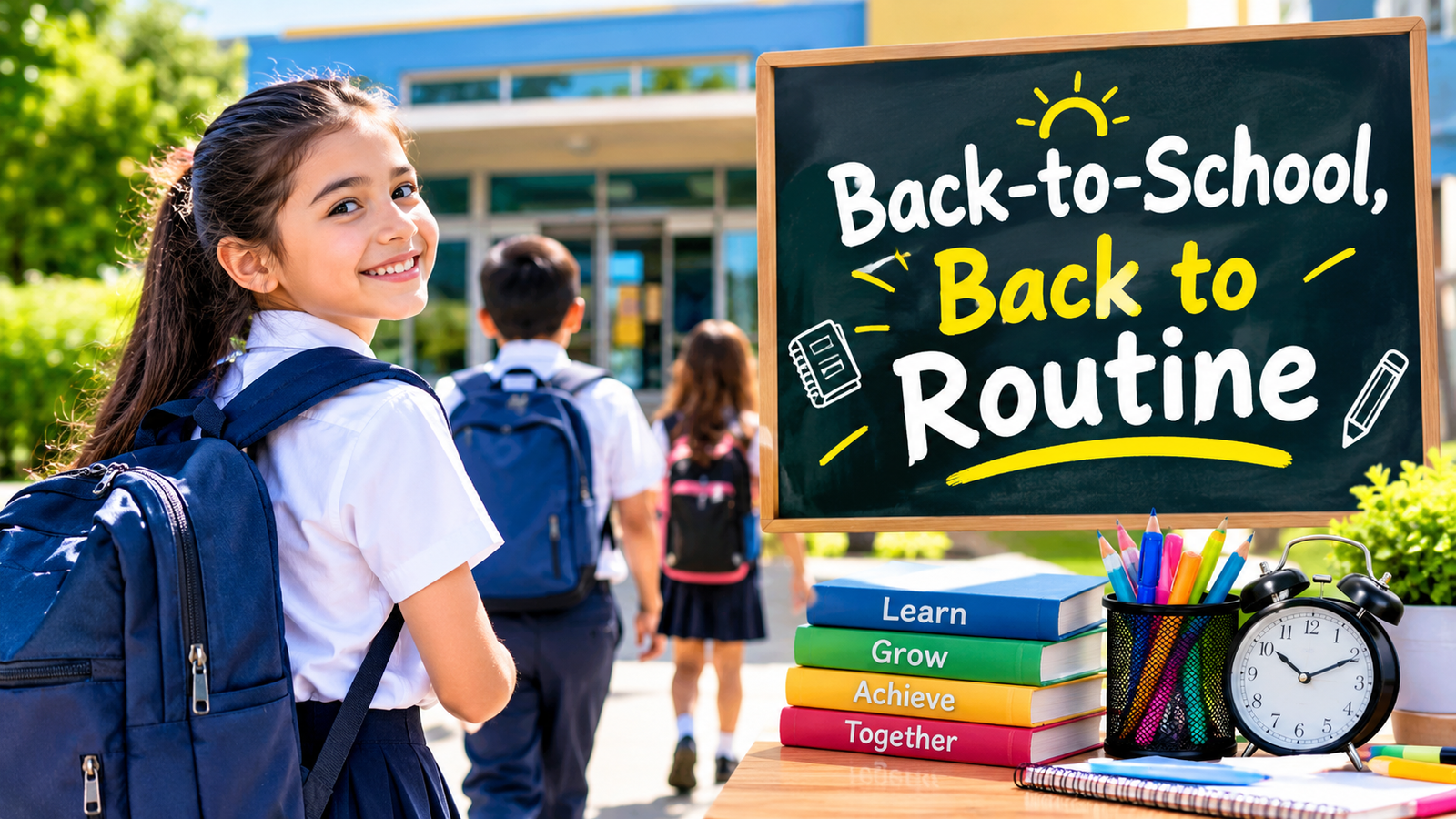
“Back-to-School, Back to Routine” is ultimately about creating a rhythm that supports learning while leaving enough space for rest, family time, friendships, and personal interests.
Why Getting Back Into a Routine Matters
During school holidays, bedtime may become later, mornings may start more slowly, and daily responsibilities may be less structured. Returning immediately to a demanding school schedule can therefore feel like a major adjustment.
A predictable routine gives students a clearer idea of what happens next. Regular sleeping, eating, studying, and relaxing times can reduce unnecessary morning stress and make school days easier to manage.
A routine also encourages independence. When students know where their school supplies are, when homework needs to be completed, and what they need to prepare the night before, they can gradually take greater responsibility for their own schedules.
Start With a Healthy Sleep Schedule
Sleep should be one of the first priorities when preparing for school. Children and teenagers generally need more sleep than adults, and consistent sleep supports concentration, learning, mood, and daily functioning.
Instead of making a dramatic change immediately, families can gradually move bedtime and wake-up times toward the school-year schedule. Going to bed and waking up at approximately the same times each day can make the transition smoother.
A relaxing evening routine can also help. Students may benefit from finishing school preparation before bedtime, reducing stimulating activities late at night, and allowing enough time to wind down.
The goal is not simply to sleep earlier. It is to establish a dependable pattern that makes waking up for school more manageable.
Create a Simple Morning Routine
School mornings can quickly become stressful when every decision is left until the last minute.
A simple morning sequence can help students know exactly what to do after waking up. This might include getting dressed, washing up, eating breakfast, checking the school bag, and leaving at the planned time.
Preparing clothing, books, homework, and other essentials the night before can reduce last-minute searching.
A routine does not need to be complicated. In fact, the best routine is usually one that is simple enough to follow consistently.
Organize School Supplies
A new school year often means new notebooks, folders, stationery, uniforms, technology, and other supplies. Before buying everything again, it can be useful to check what is already available at home.
Organizing existing supplies can save money and prevent unnecessary purchases. Students can create separate spaces for books, notebooks, stationery, sports equipment, and other frequently used items.
Keeping everyday school essentials in predictable places makes the morning routine easier and encourages better organization.
Build a Homework Routine
Homework becomes easier when students have a regular time and suitable place for completing it.
A dedicated study area does not necessarily need to be a separate room. A quiet, well-organized corner can work if it provides enough space and minimizes distractions.
Students can also divide larger assignments into smaller tasks. Instead of waiting until the deadline approaches, breaking a project into manageable steps can make the workload feel less overwhelming.
It is also reasonable to allow a short transition period after school. Students may need time to eat, relax, move around, or talk with family before beginning homework.
Plan Meals and Snacks
Busy school schedules can make meals feel like another challenge. Planning ahead can make mornings and afternoons more predictable.
A balanced breakfast can provide an opportunity to start the day with nourishment, while prepared lunches and snacks can reduce the pressure of making decisions during busy mornings.
Families can prepare some items in advance and involve students in simple meal-planning decisions. This can also help older students develop practical skills they will use beyond school.
Water should also remain part of the everyday school routine.
Make Time for Physical Activity
Returning to school should not mean eliminating movement and recreation.
Walking, outdoor play, sports, cycling, or other enjoyable activities can provide a useful break from academic work. Physical activity can also create a healthy separation between school responsibilities and homework time.
The most sustainable approach is to choose activities that students enjoy and can realistically fit into their schedules.
Prepare for Emotional Changes
The return to school can bring excitement, but it can also bring nervousness. Students may worry about new teachers, unfamiliar classmates, academic expectations, changing schedules, or social situations.
Parents and caregivers can make the transition easier by listening rather than dismissing these concerns.
Talking about the school day, discussing possible challenges, and preparing for changes can help students feel more confident. Younger students may especially benefit from knowing what their morning will look like before the first day arrives.
A little nervousness at the beginning of a new school year is not necessarily a problem. Adjustment takes time.
Reduce Morning Chaos
One of the easiest ways to improve school mornings is to move preparation into the previous evening.
Before going to bed, students can check their timetable, pack their school bag, prepare clothing, complete necessary homework, and make sure important items are ready.
Families can also establish consistent locations for bags, shoes, lunch boxes, and other daily essentials.
This simple system turns the morning into a sequence of familiar actions rather than a search for missing items.
Balance Schoolwork and Free Time
A successful routine should not be entirely about productivity.
Students need opportunities to relax, socialize, enjoy hobbies, spend time with family, and simply take a break. An overly crowded schedule can make the return to school more stressful.
The objective is balance. School responsibilities should have a clear place in the day, but so should rest and enjoyable activities.
A realistic routine is more sustainable than a perfect schedule that becomes impossible to maintain.
Use Technology Wisely
Technology can be useful for schoolwork, calendars, reminders, communication, and organization. However, recreational screen use can also compete with homework, family time, and sleep.
Families can establish reasonable boundaries around devices, particularly during study and bedtime periods.
Students can also use digital calendars or reminders to track assignments and important dates. Used thoughtfully, technology can become an organizational tool rather than another source of distraction.
Give the Routine Time to Work
One of the biggest mistakes families can make is expecting everything to become perfect immediately.
Returning to school is an adjustment. A student may forget something, sleep later than planned, struggle with homework, or need to change part of the schedule.
Instead of abandoning the routine after one difficult day, families can identify what went wrong and make a small adjustment.
Consistency matters more than perfection.
A Practical Back-to-School Checklist
Before the school routine becomes fully established, students can check:
- School supplies are organized.
- Books and notebooks are ready.
- School clothing or uniform is prepared.
- The school bag has a designated place.
- Homework is recorded and completed on schedule.
- Bedtime and wake-up times are becoming consistent.
- Breakfast and lunch arrangements are planned.
- Study space is clean and comfortable.
- Important school dates are recorded.
- Time is available for relaxation and hobbies.
Conclusion
“Back-to-School, Back to Routine” is not about creating a rigid timetable that controls every minute of the day. It is about rebuilding predictable habits that help students feel prepared, rested, organized, and confident.
The strongest routines usually begin with a few simple foundations: consistent sleep, organized mornings, regular study time, nutritious meals, movement, and enough time to relax.
A new school year is also a fresh opportunity. Students can use the transition to develop better organizational skills, become more independent, and discover routines that make everyday life easier.
With patience and gradual preparation, the journey from summer freedom to school-year structure can become less stressful and more positive for the entire family.
