Introduction
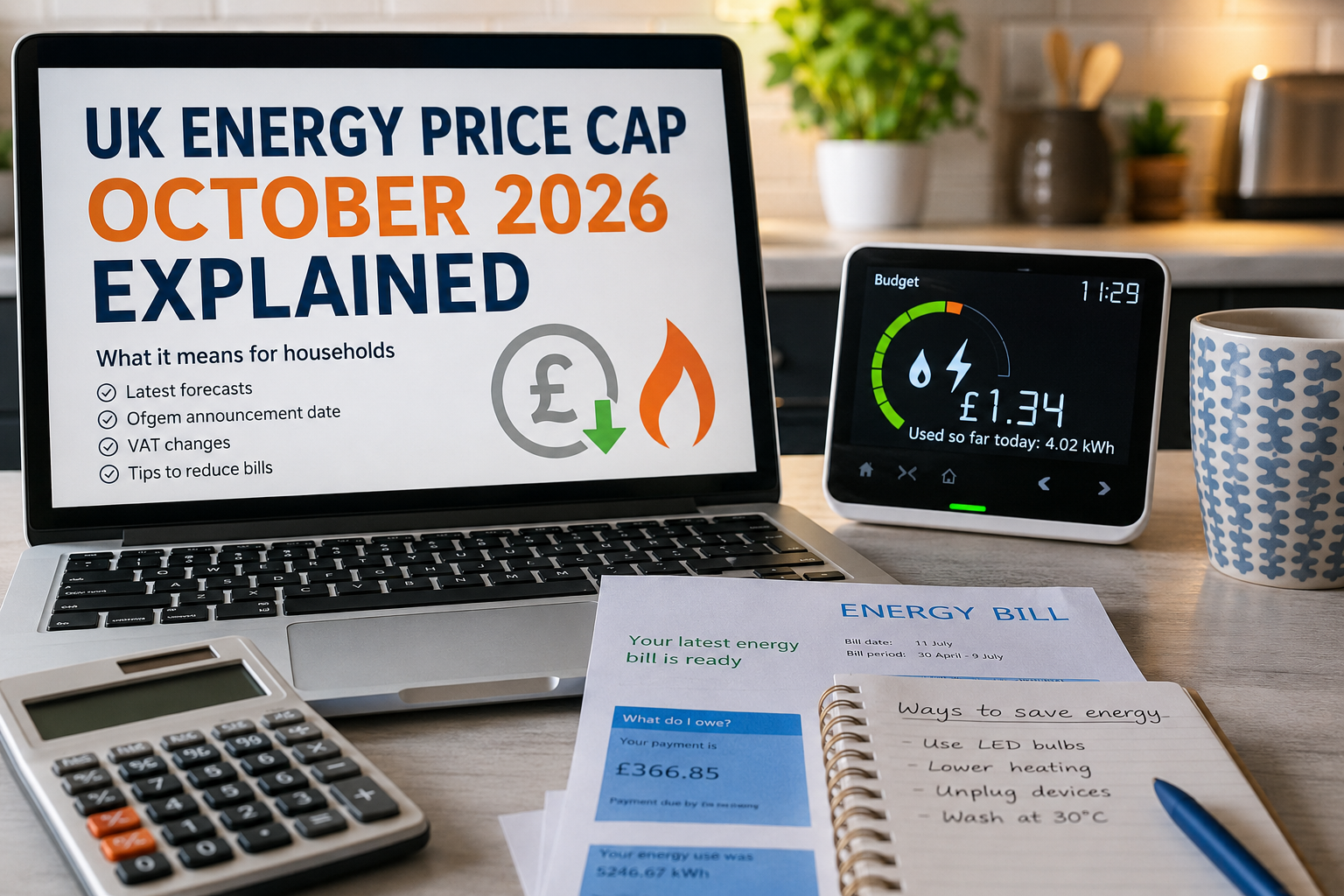
The UK energy price cap for October 2026 is an important topic for millions of households as colder weather approaches. Current forecasts suggest that energy prices could rise again from 1 October 2026, although the final price cap has not yet been announced.
Ofgem, the energy regulator for Great Britain, says the official cap covering 1 October to 31 December 2026 will be published by 26 August 2026. Until that announcement arrives, figures being reported by energy companies and analysts remain predictions.
Quick Answer
As of 11 August 2026, forecasts generally suggest that the October energy price cap for a typical dual-fuel household paying by Direct Debit could be around £1,700 to £1,765 a year, using Ofgem’s newer typical household consumption figures.
For example, E.ON Next is currently predicting about £1,717, while British Gas published a forecast of £1,765. Cornwall Insight’s 22 July forecast was approximately £1,700. These numbers can still change before Ofgem makes its official announcement.
What Is the Energy Price Cap?
The energy price cap is a limit set by Ofgem on the rates energy suppliers can charge customers who are on standard or default variable tariffs.
It limits two important parts of an energy bill:
- The price charged for each unit of gas or electricity used.
- The daily standing charge for being connected to the energy network.
It does not mean your total yearly bill cannot go above the headline price cap figure.
A household that uses more energy will normally pay more. A household that uses less energy can pay less.
When Does the October 2026 Energy Price Cap Start?
The next price cap will apply from:
1 October 2026 to 31 December 2026.
Ofgem reviews the energy price cap every three months. The next official announcement must be made by 26 August 2026.
This means any exact October price cap figure published before Ofgem’s announcement should currently be described as a forecast, not a confirmed price.
What Is the Current Energy Price Cap?
The current cap covers 1 July to 30 September 2026.
Ofgem’s published July rates for an average Direct Debit customer are:
| Energy | Unit Rate | Daily Standing Charge |
|---|---|---|
| Electricity | 26.11p per kWh | 57.19p |
| Gas | 7.33p per kWh | 29.04p |
These are national average figures, and actual rates can vary by region.
You may see both £1,862 and £1,663 quoted when reading about the July 2026 price cap. This is because Ofgem changed the Typical Domestic Consumption Values used to describe an average household.
The newer benchmark assumes annual consumption of 2,500 kWh of electricity and 9,500 kWh of gas, compared with the previous benchmark of 2,700 kWh of electricity and 11,500 kWh of gas. The lower headline number therefore does not mean energy unit prices suddenly became cheaper.
What Is the October 2026 Energy Price Cap Forecast?
There is currently no single confirmed number.
Recent forecasts include:
| Forecaster | October 2026 Forecast |
|---|---|
| Cornwall Insight | About £1,700 |
| E.ON Next | About £1,717 |
| British Gas | About £1,765 |
The forecasts use the newer typical household consumption assumptions, although forecast methods and update dates differ.
This suggests households should currently prepare for a headline cap somewhere around the low-to-mid £1,700s, but it would be wrong to treat any of these figures as final.
Wholesale energy prices can move quickly, which is one reason forecasts can change before the cap is officially calculated.
Why Could Energy Bills Rise in October 2026?
Several costs are included when Ofgem calculates the price cap.
These include wholesale gas and electricity prices, energy network costs, supplier operating costs and taxes.
Wholesale energy markets have remained volatile during 2026. Energy suppliers including EDF and British Gas have highlighted international events and changes in wholesale prices as important factors affecting their future price-cap forecasts.
The October cap is particularly important because it arrives just as many households begin using more heating.
What Is Happening to VAT on Electricity?
Another major change starts on 1 October 2026.
The Government announced that VAT on household electricity will temporarily fall from 5% to 0%. The measure is designed to reduce the electricity part of household bills.
However, higher underlying energy costs could reduce or even outweigh much of the benefit for households remaining on price-capped tariffs.
Cornwall Insight estimated in July that removing VAT from electricity could save roughly £44 on a typical dual-fuel annual bill, while warning that rising wholesale costs were pushing the overall October cap upwards.
The important point is that a VAT saving and a rising price cap can happen at the same time.
Does the Price Cap Apply to Everyone?
No.
The price cap mainly protects households on standard or default variable energy tariffs.
Customers on a fixed tariff normally continue paying the rates agreed in their fixed contract rather than automatically moving to each new Ofgem cap.
The Ofgem price cap applies in England, Scotland and Wales. Northern Ireland has a different energy market and regulatory system.
Does a £1,700 Price Cap Mean My Bill Will Be £1,700?
No.
This is one of the most common misunderstandings about the energy price cap.
The headline annual number is an illustration based on a household using a set amount of gas and electricity.
Your actual bill depends on:
- How much gas you use.
- How much electricity you use.
- Where you live.
- Your payment method.
- Your tariff.
- Your meter type.
Using more energy can result in a bill above the headline cap figure because the cap controls rates, not the maximum total amount you can be charged.
Should You Fix Your Energy Tariff Before October?
There is no single answer that is right for every household.
A fixed tariff can protect you from some future price increases, but it may also stop you benefiting fully if energy prices later fall. Exit fees can also make some fixed deals expensive to leave.
Before switching, compare the actual gas and electricity unit rates and standing charges, rather than looking only at an estimated annual bill.
It is also worth comparing your own annual energy use because Ofgem’s headline figures are only examples based on typical consumption.
How Can Households Reduce Energy Costs?
Reducing unnecessary energy use can lower the total bill because customers still pay for every unit they consume.
Simple steps can include switching unused devices off, reducing unnecessary heating, using appliances efficiently and regularly submitting meter readings if you do not have a smart meter.
Accurate meter readings can also reduce the chance of receiving bills based on inaccurate estimated consumption.
When Will We Know the Exact October 2026 Price Cap?
Ofgem says the official rates for 1 October to 31 December 2026 will be published by 26 August 2026.
That announcement will provide the confirmed unit rates and standing charges that households should use instead of current forecasts.
Until then, figures such as £1,700, £1,717 or £1,765 should be treated only as estimates.
Frequently Asked Questions
What will the energy price cap be in October 2026?
It has not yet been officially confirmed. Current forecasts broadly point towards the low-to-mid £1,700s a year for typical dual-fuel use under Ofgem’s newer consumption benchmark.
When is the October 2026 energy price cap announced?
Ofgem says it will publish the October-to-December cap by 26 August 2026.
When will the new cap start?
It takes effect on 1 October 2026 and runs until 31 December 2026.
Is the energy price cap a maximum yearly bill?
No. It limits unit rates and standing charges. Your total bill still depends mainly on how much energy you use.
Will electricity VAT fall in October 2026?
Yes. The Government has announced a temporary reduction in VAT on household electricity from 5% to 0% beginning on 1 October 2026.
Will gas VAT also be removed?
The announced October measure specifically removes VAT from household electricity. MoneySavingExpert reports that VAT will continue to apply to gas bills.
Will everyone be affected by the October price cap?
No. Its direct effect is mainly on customers using standard or default variable tariffs. Fixed-tariff customers generally continue on their agreed tariff rates.
Final Summary
The UK energy price cap for October 2026 is expected to rise, but there is no official final figure yet.
Current forecasts suggest a typical dual-fuel annual figure somewhere around £1,700 to £1,765, with recent estimates including approximately £1,717 from E.ON Next and £1,765 from British Gas.
The most important date is 26 August 2026, when Ofgem is due to confirm the cap that will apply from 1 October.
Households should remember that the headline cap is not a maximum bill. What you actually pay depends on your energy consumption and the unit rates that apply to your tariff.
