Introduction
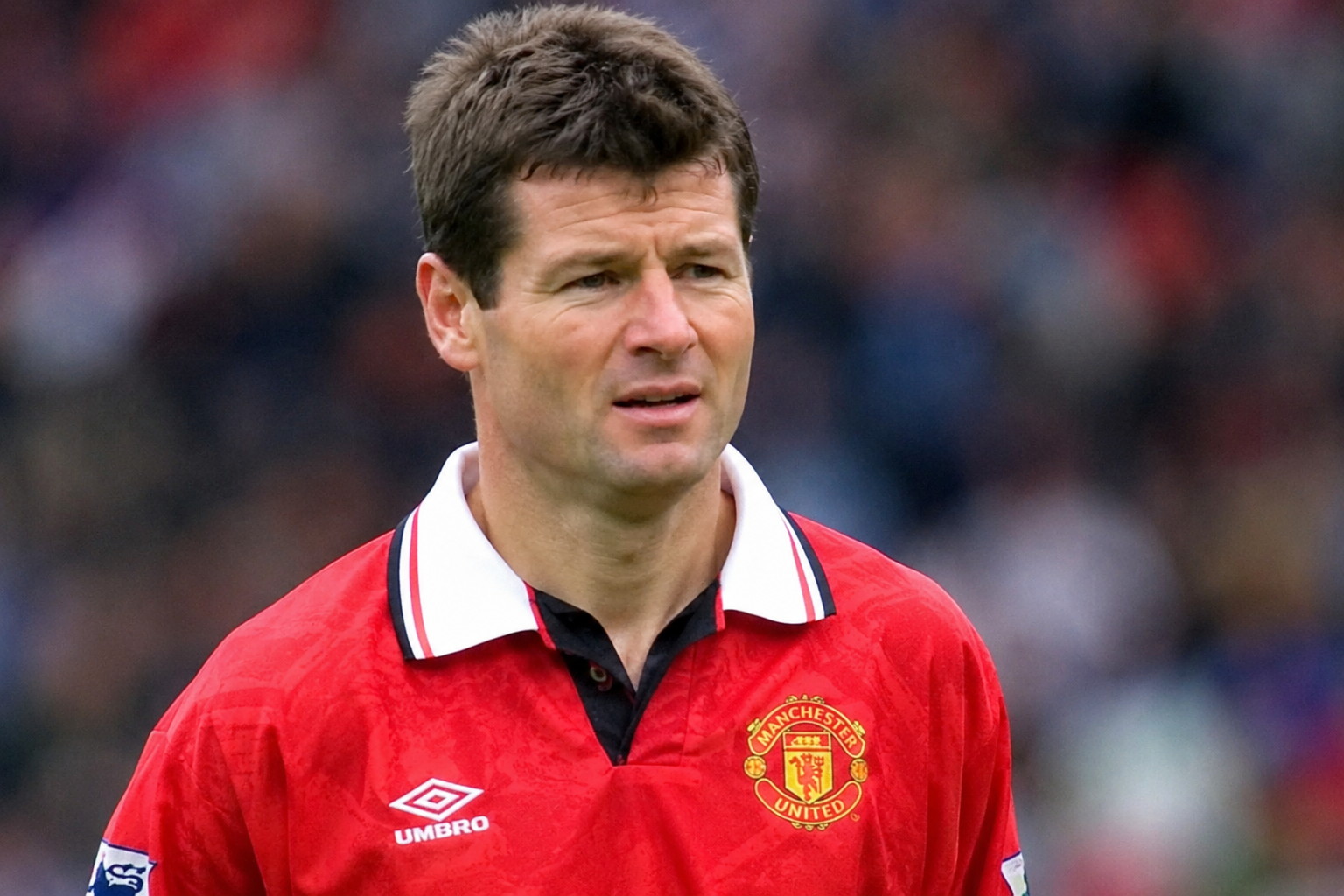
Denis Irwin is one of the most accomplished Irish defenders of his generation. Born in Cork on 31 October 1965, the Irish former footballer built a professional career that lasted from 1983 until 2004. His journey took him from Leeds United and Oldham Athletic to Manchester United, where he spent 12 highly successful years before finishing his playing career with Wolverhampton Wanderers.
Irwin became particularly famous for his reliability at full-back, his ability to operate on either side of the defence, and his effectiveness from set pieces. He also represented the Republic of Ireland 56 times between 1990 and 1999 and played at the 1994 FIFA World Cup. In 2025, the Football Association of Ireland inducted him into its Hall of Fame, recognising his contribution to Irish football.
Quick Bio
| Category | Details |
|---|---|
| Full name | Joseph Denis Irwin |
| Known as | Denis Irwin |
| Date of birth | 31 October 1965 |
| Birthplace | Cork, Ireland |
| Nationality | Irish |
| Profession | Former professional footballer, sports television presenter |
| Playing position | Full-back |
| Youth club | Leeds United |
| Senior clubs | Leeds United, Oldham Athletic, Manchester United, Wolverhampton Wanderers |
| Republic of Ireland career | 1990–1999 |
| Ireland appearances | 56 |
| Ireland goals | 4 |
| Professional playing career | 1983–2004 |
| Height | 1.73 metres |
| Major club | Manchester United |
| 1994 World Cup | Republic of Ireland |
| FAI Hall of Fame | Inducted in 2025 |
The basic biographical and playing information is documented across football reference sources and Irish football records.
Early Life and Background
Denis Irwin was born and raised in Cork, Ireland. His connection with Cork has remained an important part of his public identity, and Manchester United has published an interview in which he reflected on growing up in his native city. The club’s profile describes him as a proud Irishman and looks at his experiences as a young footballer in Cork.
His early football development eventually led him to the Leeds United youth system. Rather than following a short route directly into elite football, Irwin developed through English club football before establishing himself at a higher level. His early years helped create the dependable defensive style that later became one of the defining features of his career.
Public sources provide much less reliable information about his parents, grandparents, siblings, detailed family tree, childhood home, or other private family matters. Those details are therefore not included here rather than being presented as fact without dependable evidence.
Education and Football Development
Available biographical information identifies Coláiste Chríost Rí in Cork among Irwin’s educational background. His football development, however, is much better documented than his academic life. Leeds United became the significant step in his transition toward professional football.
Irwin’s development was based heavily on competitive football and experience. His professional career began with Leeds United in 1983, and he made 72 league appearances for the club before moving to Oldham Athletic in 1986.
Career Beginnings at Leeds United
Irwin entered senior football with Leeds United in 1983. His first professional period was important because it provided the foundation for the defensive career that followed. He accumulated 72 league appearances and scored once during his Leeds spell.
The move to Oldham Athletic in 1986 proved particularly valuable. At Oldham, Irwin gained further first-team experience and developed into a highly respected defender. His performances eventually attracted Manchester United, creating the turning point that transformed his career.
Rise at Oldham Athletic
Irwin played for Oldham Athletic from 1986 to 1990, making 167 league appearances and scoring four goals. His time at Boundary Park demonstrated that he could handle the demands of regular senior football and compete effectively in important cup matches.
The 1989–90 season was especially significant. Oldham reached the League Cup final and the FA Cup semi-finals, giving Irwin exposure to major matches and helping establish his reputation. He was also selected in the PFA Team of the Year for the Second Division that season.
Manchester United Breakthrough
Manchester United signed Denis Irwin in 1990 for a reported £650,000 fee. The transfer represented the biggest step of his professional career. He soon became an important part of Sir Alex Ferguson’s Manchester United side.
Irwin spent 12 years at Old Trafford and made 368 league appearances, scoring 22 goals. His versatility was especially valuable because he could play at either full-back position. His defensive discipline, crossing, set-piece ability, and consistency made him a trusted member of one of the most successful Manchester United teams of the era.
Manchester United Honours
Irwin’s Manchester United career produced an extraordinary collection of trophies. He won seven Premier League titles, the 1991 European Cup Winners’ Cup, the 1991 European Super Cup, the 1992 League Cup, two FA Cups, the 1999 UEFA Champions League, and the 1999 Intercontinental Cup. He also collected several Charity Shield medals.
His success was not simply a result of being part of a large squad. His consistency allowed him to remain important across different stages of Ferguson’s team-building. He was involved in the club’s transformation from the early 1990s into the dominant English side of the decade.
The 1999 Treble Era
The 1998–99 season stands among the most memorable periods of Irwin’s career. Manchester United won the Premier League, FA Cup, and UEFA Champions League, completing a historic treble. Irwin was an important member of the squad during the campaign, although suspension prevented him from playing in the Champions League final itself.
That disappointment was one of the negative moments in an otherwise highly successful career. Nevertheless, Irwin had already contributed throughout the campaign and later remained part of the United side that celebrated the club’s extraordinary European achievement.
Republic of Ireland Career
Irwin represented the Republic of Ireland at several international levels before becoming a senior international. His senior career lasted from 1990 until 1999. He won 56 senior caps and scored four goals. His first senior appearance came against Morocco on 12 September 1990.
One of the biggest international highlights was the 1994 FIFA World Cup in the United States. Ireland reached the last 16, giving Irwin the opportunity to compete on football’s biggest international stage. His final senior international appearance came against Turkey in November 1999 during a European Championship play-off.
Playing Style and Strengths
Irwin was valued for his balance rather than flashy individualism. He was comfortable on both sides of the defence, technically reliable, tactically disciplined, and capable of contributing in attack. His set-piece ability was another notable strength.
His penalty and free-kick skills added another dimension to his game. For a defender, his goal contribution was significant, particularly during his Manchester United years. His ability to perform consistently for many seasons explains why he remained trusted even as Manchester United developed younger defenders.
Career Timeline
1983
Irwin began his senior professional career with Leeds United.
1986
He moved from Leeds United to Oldham Athletic.
1989–1990
He helped Oldham reach major domestic cup stages and was named in the PFA Team of the Year.
1990
Manchester United signed Irwin, and he began his long association with the club. He also made his Republic of Ireland senior debut.
1991
He won European silverware with Manchester United, including the European Cup Winners’ Cup and European Super Cup.
1992
Irwin won the League Cup with Manchester United.
1993–1994
He became part of United’s early Premier League success and won major domestic honours.
1994
He represented the Republic of Ireland at the FIFA World Cup.
1995–1997
Irwin remained an important member of Manchester United’s successful domestic teams.
1998–1999
He was part of the Manchester United squad that won the Premier League, FA Cup, and Champions League treble.
2001
His long Manchester United career came to an end after 12 years at Old Trafford.
2002
He joined Wolverhampton Wanderers.
2003
He helped Wolves win promotion through the First Division play-offs.
2004
Irwin ended his professional playing career after his spell with Wolverhampton Wanderers.
Wolverhampton Wanderers and Retirement
After leaving Manchester United, Irwin joined Wolverhampton Wanderers in 2002. He made 75 league appearances and scored twice during his two seasons with the club. His experience was valuable as Wolves pursued promotion.
Wolves achieved promotion through the First Division play-offs in 2003, giving Irwin another important achievement near the end of his playing career. He remained at the club until 2004, bringing a professional playing career of more than two decades to a close.
Career Statistics and Achievements
Across the four clubs listed in major football statistical records, Irwin made 682 domestic league appearances and scored 29 league goals. His club career covered Leeds United, Oldham Athletic, Manchester United, and Wolverhampton Wanderers.
His individual recognition included four PFA Team of the Year selections across different competitions and eras. He was later included in the PFA Team of the Century selection for the 1997–2007 period and was inducted into the English Football Hall of Fame in 2016 according to published football records.
Personal Life
Irwin has generally maintained a relatively private personal life. Reliable reporting confirms that he is married and refers to his wife and family, including an incident surrounding the 1995 Lansdowne Road disturbance involving Ireland and England.
Beyond those documented references, detailed information about his children, extended relatives, private friendships, personal routines, diet, pets, properties, vehicles, or other lifestyle matters is not sufficiently established in the reliable sources reviewed. These details are therefore not added as facts.
Life After Football
Following his playing career, Irwin continued to have connections with football and sports broadcasting. He has appeared in Manchester United programming and has participated in discussions about his playing days and his experiences growing up in Cork. Manchester United has also produced dedicated programming looking back at his life and career.
He has also remained involved with Manchester United legends events and Irish football occasions. His continued presence around the game demonstrates the lasting relationship between Irwin and the football communities in England and Ireland.
FAI Hall of Fame Recognition
A significant recent honour came in 2025 when the Football Association of Ireland announced Irwin as one of the inductees into its Hall of Fame. The FAI specifically highlighted his 56 international caps and his participation in the 1994 FIFA World Cup.
The recognition adds another important chapter to the story of an Irish defender whose career combined international football with sustained success at one of England’s most successful clubs.
Legacy of Denis Irwin
The legacy of Denis Irwin is built around consistency, adaptability, and achievement. He was not defined by one spectacular season or one famous match. Instead, his reputation grew through years of dependable performances at club and international level.
His career also represents an important link between Irish football and Manchester United’s golden period under Sir Alex Ferguson. His trophy collection, longevity, international record, and continued involvement in football have ensured that his name remains closely associated with both Cork and Manchester United.
Conclusion
Denis Irwin’s career is a powerful example of how consistency can become a defining strength in elite football. From his beginnings at Leeds United and development at Oldham Athletic to 12 trophy-filled years at Manchester United, he built a career based on reliability, versatility, and professionalism.
His 56 appearances for the Republic of Ireland, participation in the 1994 World Cup, promotion success with Wolverhampton Wanderers, and extensive Manchester United honours complete an exceptional football story. The 2025 FAI Hall of Fame recognition further confirms his lasting place in Irish football history.
Frequently Asked Questions
1. Who is Denis Irwin?
Denis Irwin is an Irish former professional footballer who played mainly as a full-back and became famous for his long Manchester United career.
2. When and where was Denis Irwin born?
He was born on 31 October 1965 in Cork, Ireland.
3. What is Denis Irwin’s full name?
His full name is Joseph Denis Irwin.
4. Is Denis Irwin married?
Reliable reporting confirms references to Irwin’s wife and family, although detailed private family information is limited in dependable public sources.
5. Does Denis Irwin have children?
Detailed information about his children is not sufficiently documented in the reliable sources reviewed, so no unsupported details are included.
6. Where did Denis Irwin begin his professional career?
He began his senior professional career with Leeds United in 1983 before moving to Oldham Athletic in 1986.
7. How many times did Denis Irwin play for Ireland?
He made 56 senior appearances for the Republic of Ireland and scored four goals.
8. How many Premier League titles did Denis Irwin win?
He won seven Premier League titles with Manchester United.
