Introduction
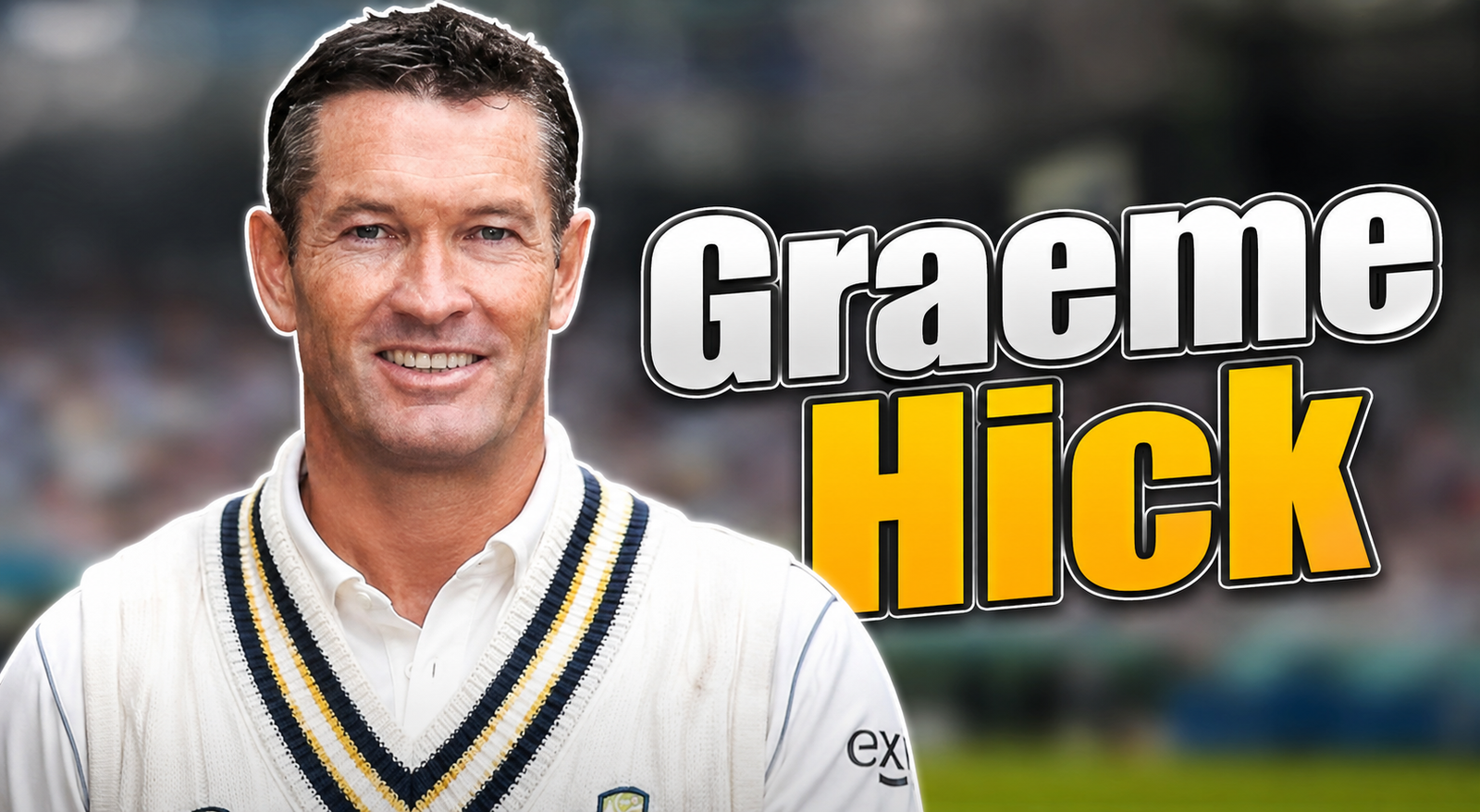
Graeme Hick is a former England international cricketer who became one of the greatest run-scorers in the history of first-class cricket. He is mainly known for his long career with Worcestershire, his 65 Test matches for England and his huge total of 41,112 first-class runs.
His full name is Graeme Ashley Hick MBE. He was born in Salisbury, Rhodesia, which is now called Harare in Zimbabwe. He later qualified to represent England and played international cricket from 1991 to 2001.
Hick’s county record was much stronger than his Test record. He scored 136 first-class centuries, including a career-best innings of 405 not out. After retiring as a player, he moved into coaching and later worked as the batting coach of the Australian men’s cricket team.
As of August 2026, Hick is a retired professional cricketer and former international batting coach. Worcestershire County Cricket Club also lists him as an honorary life member.
Graeme Hick Quick Bio
| Detail | Information |
|---|---|
| Full name | Graeme Ashley Hick |
| Date of birth | 23 May 1966 |
| Birthplace | Salisbury, Rhodesia, now Harare, Zimbabwe |
| Profession | Former professional cricketer and cricket coach |
| Batting style | Right-handed |
| Bowling style | Right-arm off-break |
| International team | England |
| England career | 1991 to 2001 |
| Test matches | 65 |
| One Day Internationals | 120 |
| Main county club | Worcestershire |
| First-class runs | 41,112 |
| First-class centuries | 136 |
| Highest first-class score | 405 not out |
| Major honour | MBE for services to sport |
| Current status | Retired cricketer and former Australia batting coach |
Who Is Graeme Hick?
Graeme Hick is a Zimbabwean-born former England batter who spent most of his professional playing career with Worcestershire.
He became famous because of his ability to score very large numbers of runs in county cricket. Few players in cricket history have scored more first-class centuries.
Hick was a right-handed top-order batter. He could also bowl off-spin when his team needed another bowling option.
His career is often discussed because of the difference between his county and international performances. He dominated domestic attacks for many years, but he found it more difficult to produce the same results regularly in Test cricket.
Even so, playing 65 Tests and 120 One Day Internationals shows that he remained an important England player for a long period.
Early Life in Zimbabwe
Graeme Hick was born on 23 May 1966 in Salisbury, the city now known as Harare.
He showed unusual sporting ability from a young age. According to Wisden, he was only six years old when he scored his first cricket century.
Hick attended Prince Edward School in Salisbury. The school had a strong sporting tradition and helped him develop his cricket skills.
He was also a talented hockey player. However, cricket eventually became his main sport and professional career.
His performances as a young batter quickly attracted attention. At the age of 17, he was included in Zimbabwe’s squad for the 1983 Cricket World Cup. He did not play in a match during the tournament, but his selection showed how highly he was rated as a teenager.
Beginning His Career With Worcestershire
Hick joined Worcestershire and made his first-class debut in 1984.
He immediately showed that he could compete at senior level. His strong performances soon made him one of the most discussed young batters in English county cricket.
In 1986, he became the youngest player at that time to score 2,000 first-class runs during an English season.
His success earned him a place among Wisden’s Five Cricketers of the Year in 1987. This honour is given to players who make an important impact during the previous English cricket season.
Hick continued playing for Worcestershire for around 25 years. His long connection with one county made him one of the club’s most recognisable players.
Readers interested in other British sporting careers can also explore Jay Matete’s football career and current club.
Graeme Hick’s Famous 405 Not Out
One of the biggest moments of Hick’s career came in 1988.
He scored 405 not out for Worcestershire against Somerset at Taunton. It remains one of the highest individual scores in first-class cricket.
An innings of this size requires more than natural skill. A batter must remain focused for many hours while facing different bowlers, changes in the field and physical tiredness.
The 405 not out helped confirm Hick as one of the leading county batters of his generation.
The 1988 season was also highly successful for Worcestershire. The club won the County Championship and the Refuge Assurance League. Worcestershire then retained the County Championship in 1989.
Why Did Graeme Hick Have to Wait to Play for England?
Hick was born and raised in Zimbabwe, so he was not immediately eligible to represent England.
At that time, international qualification rules required him to complete a long residence period before he could play for the England national team.
The wait created great interest around his future. Before making his England debut, he had already scored 57 first-class centuries.
Many supporters expected him to become one of England’s most successful international batters.
He finally became eligible in 1991 and made both his Test and One Day International debuts against the West Indies.
Graeme Hick’s England Test Career
Hick played his first Test match against the West Indies at Headingley in June 1991.
International cricket presented a much greater challenge than county cricket. He faced some of the world’s fastest and most experienced bowlers, including the powerful West Indian attacks of that period.
Hick played 65 Test matches for England between 1991 and 2001. He scored 3,383 Test runs at an average of 31.32.
His Test record included:
- Six centuries
- Eighteen half-centuries
- A highest score of 178
- Ten Ashes Test appearances
His highest Test score came against India in Mumbai in February 1993.
Although his Test figures were lower than many people had expected, he still played international cricket for approximately ten years. He was repeatedly dropped and recalled as England changed its teams and batting plans.
One Day International Career
Hick also represented England in 120 One Day Internationals.
He was often more comfortable in limited-overs cricket because his clean hitting and ability to score around the field suited the shorter format.
He scored 3,846 ODI runs and recorded five international one-day centuries.
Hick was part of the England team that reached the final of the 1992 Cricket World Cup in Australia. England faced Pakistan in the final at the Melbourne Cricket Ground but lost the match.
He later appeared in the 1996 and 1999 World Cups for England.
His Century at Lord’s
One of Hick’s most memorable international performances came against Zimbabwe at Lord’s in 2000.
He scored 101 against the country of his birth. It was his sixth and final Test century.
The innings earned him a place on the famous Lord’s batting honours board.
Hick reached the century after spending a nervous period on 99. He eventually completed the hundred by playing the ball into the leg side.
England won the Test by an innings and 209 runs.
Extraordinary First-Class Cricket Record
Hick’s first-class statistics explain why he remains such an important name in cricket history.
He played 526 first-class matches and scored 41,112 runs during a professional career lasting approximately 25 years.
He also scored 136 first-class centuries. According to Wisden, only seven batters had scored more first-class hundreds when its review of his record was published.
His major first-class figures include:
- 526 matches
- 41,112 runs
- 136 centuries
- 158 half-centuries
- A highest score of 405 not out
He also scored 22,059 runs in senior 50-over cricket.
These figures place Hick among the most productive professional batters the game has seen.
His 100th First-Class Century
Hick reached another major milestone in 1998 when he scored his 100th first-class century.
The hundred came for Worcestershire against Sussex at New Road.
Scoring one first-class century is an important achievement. Reaching 100 requires many years of fitness, concentration and consistent performance.
His achievement placed him in a small and historic group of batters.
Worcestershire Captaincy and Team Success
Hick was not only an important batter for Worcestershire. He also served as the club’s captain from 2000 to 2002.
During his years at the club, Worcestershire won several major competitions.
These included:
- The 1988 County Championship
- The 1988 Refuge Assurance League
- The 1989 County Championship
- The 1991 Benson and Hedges Cup
- The 1991 Refuge Assurance Cup
- The 1994 NatWest Trophy
Hick’s career covered one of the most successful periods in the county’s history.
The Worcestershire County Cricket Club’s official roll of honour records his captaincy and lists him as an honorary life member.
When Did Graeme Hick Retire?
Hick ended his professional playing career in 2008.
By the time he retired, he had spent around 25 seasons playing first-class cricket. Most of those years were with Worcestershire.
The club recognised his contribution by naming its main pavilion at New Road the Graeme Hick Pavilion.
His retirement ended an important period in English county cricket. Modern players rarely complete careers of the same length or play more than 500 first-class matches.
Coaching Career After Retirement
Hick moved into cricket coaching after ending his playing career.
In 2013, he joined Cricket Australia as a high-performance coach. His work included helping young players, Australia’s under-19 programme and cricketers inside the national performance system.
In September 2016, he was appointed batting coach of the Australian men’s national team.
The appointment allowed him to use his experience of English, Australian and international conditions to support elite players.
His work with Cricket Australia ended in June 2020 when the organisation reduced its staff and coaching structure during a cost-cutting programme. Cricket Australia later appointed new assistant coaches.
Graeme Hick’s MBE Honour
Hick was appointed a Member of the Order of the British Empire in the 2009 Birthday Honours.
The official government record lists his full name as Graeme Ashley Hick and states that the honour was awarded for services to sport.
The MBE recognised his long contribution to cricket after the end of his professional playing career.
What Is Graeme Hick Doing Now?
As of August 2026, Graeme Hick is best described as a retired England cricketer and former international batting coach.
Worcestershire continues to recognise his contribution by listing him as an honorary life member. The club’s records also show that he captained Worcestershire between 2000 and 2002.
His name remains strongly connected to New Road, where the Graeme Hick Pavilion was named in his honour.
Why Is Graeme Hick Still Famous?
Graeme Hick remains famous because his first-class record was extraordinary.
Scoring more than 41,000 runs and 136 centuries required skill, fitness and consistency across many seasons.
His career also remains interesting because it shows that success at domestic level does not always transfer perfectly to international cricket.
The difference between his county and Test records continues to be discussed by cricket writers and supporters. However, his international struggles should not hide the size of his overall achievements.
He represented England in 185 international matches across Test and ODI cricket, played in World Cups, captained Worcestershire and later coached the Australian national team.
For wider sporting history, readers may also explore this complete list of Olympic host cities.
Frequently Asked Questions
Who is Graeme Hick?
Graeme Hick is a Zimbabwean-born former England international cricketer. He is best known for his long career with Worcestershire and his exceptional first-class batting record.
When was Graeme Hick born?
He was born on 23 May 1966.
Where was Graeme Hick born?
He was born in Salisbury, Rhodesia. The city is now called Harare and is the capital of Zimbabwe.
Did Graeme Hick play for Zimbabwe?
He was selected for Zimbabwe’s squad at the 1983 Cricket World Cup but did not play in a match. He later qualified to represent England.
How many Tests did Graeme Hick play?
He played 65 Test matches for England between 1991 and 2001.
How many first-class runs did Graeme Hick score?
He scored 41,112 first-class runs in 526 matches.
What was Graeme Hick’s highest score?
His highest first-class score was 405 not out for Worcestershire against Somerset in 1988.
How many centuries did Graeme Hick score?
He scored 136 first-class centuries and six Test centuries.
Did Graeme Hick coach Australia?
Yes. He became the Australian men’s national team batting coach in 2016 after previously working in Cricket Australia’s high-performance system.
Is Graeme Hick retired?
Yes. He retired from professional cricket in 2008. He later worked as a coach and is now known as a retired cricketer and former international batting coach.
Final Words
Graeme Hick built one of the most remarkable records in first-class cricket.
He began his journey in Zimbabwe, developed into a major county player with Worcestershire and eventually represented England in both Test and One Day International cricket.
His 405 not out, 41,112 first-class runs and 136 centuries remain the central achievements of his playing career.
Although his Test results did not fully match his county dominance, he still represented England for a decade and appeared in 185 international matches.
His later work as Australia’s batting coach added another important chapter to his cricket journey. His honorary life membership and the Graeme Hick Pavilion ensure that his connection with Worcestershire remains visible.
