Introduction
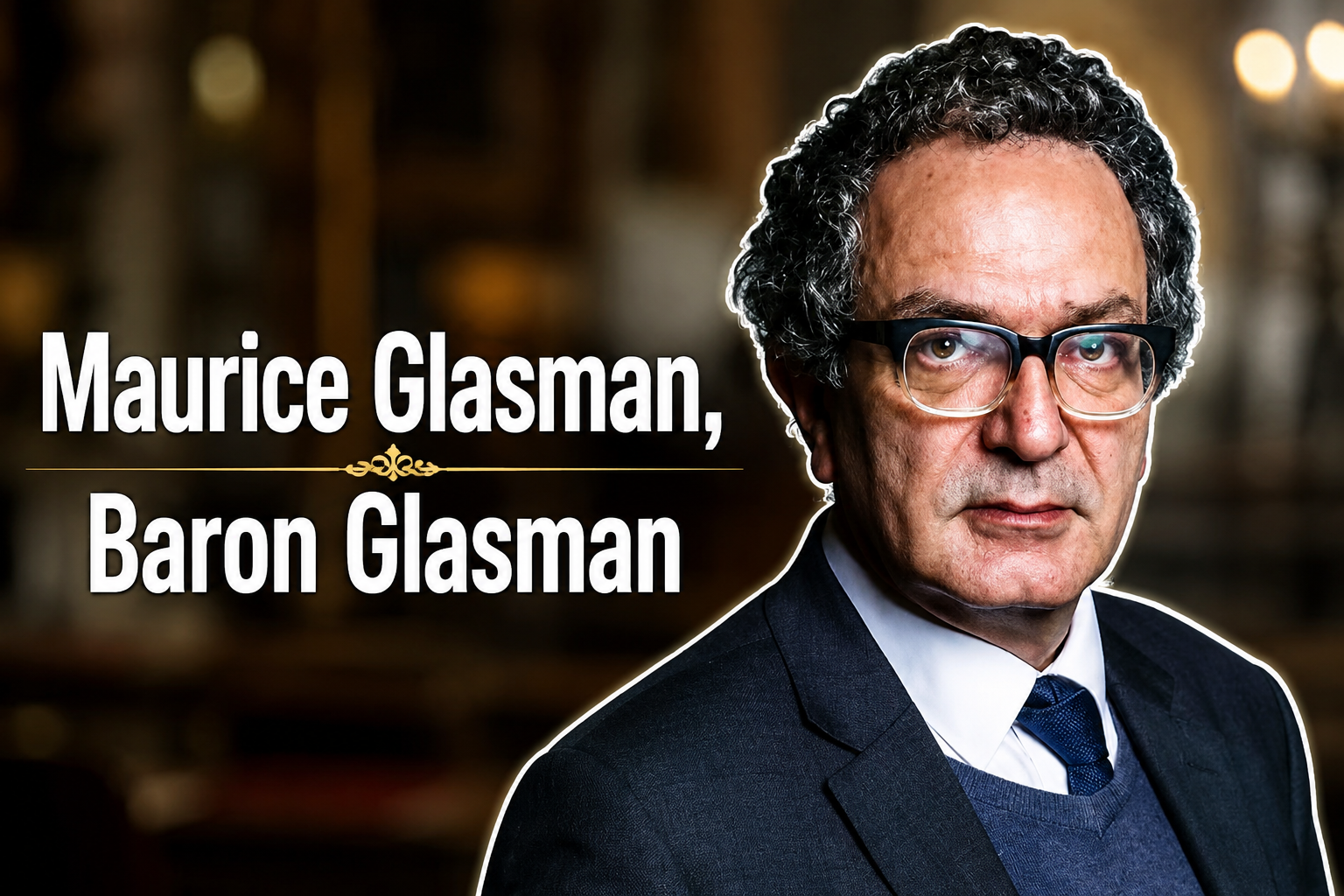
Maurice Glasman, Baron Glasman, is a British political theorist, academic, author and Labour life peer whose work has influenced debates about community, work, democracy and the future of Labour politics. Born in Walthamstow, London, in 1961, he developed an intellectual career that eventually brought him into the House of Lords and made him one of the best-known thinkers associated with Blue Labour.
His political approach is distinctive because it combines concern for economic fairness with a strong emphasis on community, belonging, tradition, democratic participation and social relationships. His ideas have attracted both support and criticism, but his influence on discussions about working-class politics and the common good remains significant.
Quick Bio
| Category | Details |
|---|---|
| Full Name | Maurice Glasman |
| Title | Baron Glasman of Stoke Newington and Stamford Hill |
| Date of Birth | 8 March 1961 |
| Age | 65 years old in 2026 |
| Birthplace | Walthamstow, London, England |
| Nationality | British |
| Profession | Political theorist, academic, author and politician |
| Political Party | Labour Party |
| Known For | Blue Labour |
| Parliamentary Role | Life peer in the House of Lords |
| Education | University of Cambridge, University of York and European University Institute |
| Major Book | Blue Labour: The Politics of the Common Good |
| Political Focus | Community, work, democracy and the common good |
Early Life and Family Background
Maurice Glasman was born on 8 March 1961 in Walthamstow, London. He grew up in north London within a Jewish family background. His early experiences of community and faith later became relevant to his political thinking and his interest in the institutions that connect people with one another.
Family and community have remained important themes throughout his intellectual work. Rather than viewing politics only through government policy or economic statistics, Glasman has frequently focused on relationships between people, families, workplaces, neighbourhoods and civic organisations.
Education and Academic Development
Glasman’s education provided the foundation for his later career as a political theorist. He studied Modern History at St Catharine’s College, Cambridge, before continuing his studies in political philosophy at the University of York.
He later completed doctoral research at the European University Institute in Florence. His academic development brought together political philosophy, economics and questions about social relationships. These interests eventually became central to his arguments about markets and communities.
Early Career and Intellectual Influences
Before becoming widely recognised as a political thinker, Glasman spent part of his early career playing jazz trumpet. He later returned to academic life and developed a reputation for examining the relationship between political institutions and society.
His thinking has been influenced by philosophers and political thinkers including Aristotle, Edmund Burke, Karl Polanyi and R. H. Tawney. Catholic social thought has also contributed to his understanding of solidarity, community and the common good.
Academic Career
Glasman developed his professional career in political theory and higher education. His academic interests have included democracy, citizenship, markets, political economy and the role of social institutions.
His academic work questioned the assumption that markets should be allowed to shape every part of social life. Instead, he explored how economic systems affect communities and relationships. This intellectual background later became closely connected with his political activities.
Community Organising and Public Engagement
An important stage in Glasman’s career was his involvement in community organising. His association with London Citizens helped him develop a practical understanding of how local communities can organise around shared interests.
Community organising reinforced his belief that citizens should not be treated merely as voters or consumers. He argued that people should have opportunities to participate directly in decisions affecting their communities.
This practical experience complemented his academic work and helped shape the political philosophy that later became associated with Blue Labour.
What Is Blue Labour?
Blue Labour is the political tradition with which Maurice Glasman is most strongly associated. It developed within the Labour movement around the idea that the party should rebuild relationships with working people and local communities.
The movement places importance on work, family, community, trade unions, democracy, faith and the common good. It also questions approaches that place excessive confidence in markets or centralised political management.
Glasman’s vision is positive in its emphasis on rebuilding social relationships, although some of his positions have also generated criticism and controversy. His supporters regard Blue Labour as an attempt to reconnect Labour politics with everyday life, while critics have challenged aspects of its socially conservative outlook.
The Common Good in Glasman’s Politics
The idea of the common good is central to Maurice Glasman’s political philosophy. He argues that society cannot be understood simply as a collection of individuals pursuing separate interests.
For Glasman, families, communities, workplaces, religious organisations, trade unions and civic groups all contribute to social life. Political institutions therefore have a responsibility to strengthen relationships rather than treating economic activity as the sole measure of progress.
Maurice Glasman and Labour Politics
Glasman became increasingly prominent during debates about the future of the Labour Party after the New Labour period. His ideas attracted attention during Ed Miliband’s leadership because they offered an alternative way of thinking about Labour’s relationship with working-class voters.
His approach encouraged Labour politicians to think about issues such as work, belonging, community and democratic participation alongside traditional questions of taxation, public services and economic inequality.
Member of the House of Lords of the United Kingdom
Maurice Glasman became a Labour life peer in 2011. His formal title is Baron Glasman of Stoke Newington and Stamford Hill in the London Borough of Hackney.
As a Member of the House of Lords of the United Kingdom, he has brought his political and academic perspective into parliamentary discussion. His position has also given him a continuing platform for debates about Labour politics, democracy and social relationships.
Brexit and Political Views
Glasman supported Brexit during the 2016 European Union referendum. His position reflected his broader concerns about democratic accountability, national political authority and the relationship between political institutions and communities.
His support for leaving the European Union was controversial within Labour because many prominent Labour politicians supported remaining. Nevertheless, the position was consistent with his wider argument that democratic institutions should be closely connected to citizens.
Books and Publications
One of Glasman’s major early works was Unnecessary Suffering: Managing Market Utopia, published in 1996. The book examined the effects of market-centred thinking and contributed to his academic reputation.
His later book, Blue Labour: The Politics of the Common Good, published in 2022, provides a detailed presentation of the ideas associated with Blue Labour. It explores questions of democracy, work, belonging, community and political responsibility.
Career Timeline
1961
Maurice Glasman was born in Walthamstow, London.
University Years
He studied Modern History at Cambridge, political philosophy at York and completed doctoral research at the European University Institute.
Early Professional Years
He spent part of his early career playing jazz trumpet before developing his academic career.
1996
He published Unnecessary Suffering: Managing Market Utopia.
2000s
He became involved in community organising and developed a stronger connection between academic political theory and practical civic activity.
Around 2009
Blue Labour emerged as a significant political tendency associated with Glasman’s ideas.
2011
He became a Labour life peer and joined the House of Lords.
2016
He supported Brexit during the European Union referendum.
2022
He published Blue Labour: The Politics of the Common Good.
2026
He remains associated with Blue Labour, political theory and debates about community and the future of Labour politics.
Public Image and Political Influence
Maurice Glasman has developed a reputation as an unconventional and outspoken political thinker. His combination of academic theory and community organising distinguishes him from many traditional Westminster politicians.
His influence has been both positive and controversial. Supporters value his criticism of excessive market individualism and his emphasis on community, while critics have questioned some of his political positions and interpretations of contemporary society.
Personal Life
Glasman has maintained a relatively private personal life compared with many public figures. Publicly documented information identifies him as married to Catherine Glasman and states that they have four children.
His Jewish family background and experiences of community have formed part of the publicly discussed context surrounding his intellectual development. Beyond established public information, detailed private information about his family life should not be assumed.
Major Achievements
Glasman’s most important political achievement is the development of Blue Labour. The movement introduced a distinctive vocabulary into Labour politics, particularly around community, belonging, work and the common good.
His appointment to the House of Lords was another major milestone. It gave him a formal parliamentary role and enabled him to contribute directly to political debates from within the legislature.
Legacy
Maurice Glasman’s legacy is closely connected with his attempt to rethink centre-left politics through the concepts of community and the common good. He challenged Labour to consider why relationships between political organisations and working-class communities had weakened.
His work remains relevant because questions about work, economic change, political trust, national identity and community continue to shape British political debate.
Conclusion
Maurice Glasman, Baron Glasman, has built an unusual career spanning academia, community organising, political theory, writing and parliamentary life. His development of Blue Labour established him as a distinctive voice in modern Labour politics.
His political philosophy combines economic concerns with a strong belief in community, democratic participation, social relationships and the common good. Although his ideas have generated disagreement as well as support, his influence on discussions about Labour’s future cannot easily be overlooked.
As a Member of the House of Lords of the United Kingdom and a leading figure associated with Blue Labour, Glasman continues to represent a political approach that asks how modern politics can reconnect with ordinary communities and rebuild meaningful democratic relationships.
Frequently Asked Questions
1. Who is Maurice Glasman, Baron Glasman?
Maurice Glasman, Baron Glasman, is a British political theorist, academic, author and Labour life peer best known for developing Blue Labour.
2. When was Maurice Glasman born?
Maurice Glasman was born on 8 March 1961 in Walthamstow, London.
3. How old is Maurice Glasman?
Maurice Glasman is 65 years old as of August 2026.
4. What is Maurice Glasman’s family background?
He grew up in north London within a Jewish family background, which has been an important part of his publicly discussed personal and intellectual history.
5. Is Maurice Glasman married?
Publicly available biographical information identifies Catherine Glasman as his wife and states that they have four children.
6. What did Maurice Glasman study?
He studied Modern History at Cambridge, political philosophy at the University of York and completed doctoral studies at the European University Institute.
7. What is Maurice Glasman famous for?
He is best known for developing Blue Labour, a political approach focused on community, work, democracy, belonging and the common good.
8. When did Maurice Glasman join the House of Lords?
He became a Labour life peer in 2011 and entered the House of Lords as Baron Glasman of Stoke Newington and Stamford Hill.
9. What is Blue Labour?
Blue Labour is a political tradition that seeks to reconnect Labour politics with working people, communities, work, democratic participation and the common good.
10. What book did Maurice Glasman publish in 2022?
He published Blue Labour: The Politics of the Common Good in 2022.
