Introduction
A car accident can happen suddenly and leave drivers unsure about what to do next. Even a relatively minor collision can involve injuries, vehicle damage, insurance claims, police reports, and disagreements about what happened. Knowing the right steps can help protect everyone’s safety and make the process of handling the accident more organized.
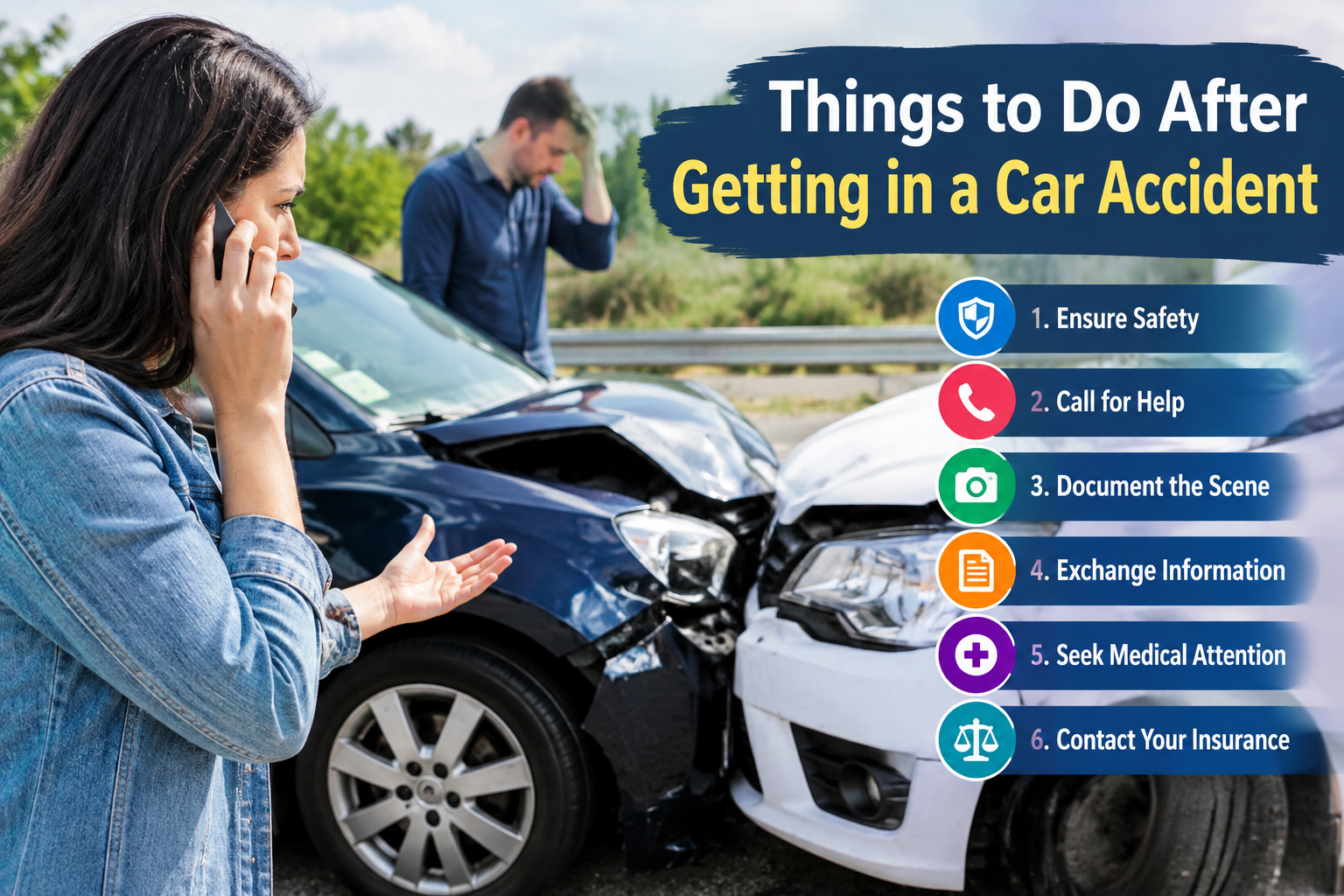
The most important priority after a crash is safety. Once immediate dangers have been addressed, drivers should document the scene, exchange relevant information, report the accident when required, seek medical attention when appropriate, and notify their insurance company promptly. The exact legal requirements differ by jurisdiction, so local rules should always be considered.
1. Check for Injuries and Get to Safety
The first thing to do after getting in a car accident is to check whether you, your passengers, or anyone else involved has been injured.
If someone needs emergency medical assistance, contact the appropriate emergency service immediately. Do not put yourself in danger while trying to help another person.
If the vehicles can be moved safely, moving them away from active traffic may reduce the risk of another collision. However, avoid moving an injured person unless there is an immediate danger requiring it.
The Insurance Information Institute recommends prioritizing people’s safety before assessing vehicle damage.
2. Contact the Police or Appropriate Authorities
Depending on the seriousness of the collision and local requirements, you may need to notify law enforcement.
A police report can provide an official record of the incident and may become useful when dealing with insurance or disputes about what happened. If officers attend the scene, record the information necessary to identify the report and ask how to obtain a copy when appropriate.
Reporting requirements differ between jurisdictions, so drivers should follow the rules applicable where the accident occurred.
3. Exchange Information With the Other Driver
After making sure everyone is safe, exchange relevant information with the other driver or drivers.
Depending on local requirements and circumstances, useful information can include:
- Full name
- Contact information
- Driver’s license information
- Vehicle registration details
- Insurance information
- Vehicle make and model
- License plate number
Remain calm and factual during the conversation. Avoid turning the scene into an argument about who caused the accident.
4. Document the Accident Scene
Taking photographs and keeping accurate notes can help preserve information that might otherwise be forgotten.
If it is safe to do so, photograph:
- Damage to all involved vehicles
- Vehicle positions
- Road conditions
- Traffic signs and signals
- Visible property damage
- Relevant surroundings
- License plates
- Other details that may help explain what happened
The Insurance Information Institute recommends documenting vehicle damage and collecting information about the accident, including the location, time, weather conditions, drivers, vehicles, and witnesses.
Avoid standing in traffic or entering an unsafe area simply to take photographs.
5. Collect Witness Information
People who saw the accident may have useful information about what occurred.
If witnesses are willing to provide their details, record their names and contact information. Do not pressure anyone to take sides or tell you what they believe you want to hear.
Keeping factual information about witnesses can be useful later if questions arise concerning the circumstances of the collision.
6. Seek Medical Attention When Necessary
Some injuries may not be immediately obvious after a stressful event. If you feel pain, dizziness, weakness, or another concerning symptom after a collision, seek appropriate medical attention.
Medical records can also become important documentation when an accident results in an injury. NHTSA crash-investigation procedures, for example, use medical records alongside crash-scene and vehicle information when studying crash injuries.
Do not ignore a concerning symptom simply because the vehicle damage appears minor.
7. Notify Your Insurance Company
Contact your insurance company as soon as reasonably possible after the accident.
The Insurance Information Institute advises contacting an insurance professional promptly, even when responsibility for the accident may appear straightforward. An insurer can explain what information and documentation are required to start a claim.
You may be asked for:
- Accident details
- Photographs
- Police or incident report information
- Driver and vehicle information
- Repair estimates
- Medical documentation when relevant
- Other supporting records
Keep copies of documents and communications connected with the claim.
8. Keep Your Accident Records Organized
Create a dedicated folder for accident-related information. Store photographs, reports, insurance correspondence, repair estimates, receipts, medical documents, and notes in one place.
Write down important dates and conversations while the details are still fresh. Good organization can make it easier to answer questions from an insurer, repair facility, or other relevant party.
The Insurance Information Institute notes that insurers may require documents such as a proof-of-claim form and, where applicable, a police report.
9. Be Careful About What You Say
After an accident, emotions can be high. Keep conversations focused on exchanging information and ensuring safety.
Avoid making exaggerated statements or guessing about facts you do not know. Instead of speculating about speed, distance, injuries, or responsibility, provide accurate information when speaking with authorities or your insurer.
Do not alter photographs, delete relevant messages, or discard documents that may relate to the accident.
10. Arrange Vehicle Repairs Carefully
Before authorizing significant repairs, understand how your insurance company’s claims process works. Your insurer may require an inspection, estimate, photographs, or other documentation.
If the vehicle appears unsafe to drive, arrange appropriate transportation or towing rather than continuing to operate a damaged vehicle.
Also keep receipts for eligible accident-related expenses and follow your policy’s instructions concerning repairs and claims.
What Not to Do After a Car Accident
Knowing what to avoid can be just as important as knowing what to do.
Do not:
- Leave the accident scene when you are legally required to remain.
- Put yourself in danger to photograph the crash.
- Argue aggressively with another driver.
- Guess about facts you do not know.
- Ignore potentially serious injuries.
- Delay notifying your insurer when your policy or circumstances require prompt notice.
- Throw away accident-related documents.
- Authorize major repairs without understanding the insurance process.
The Insurance Information Institute specifically advises people not to leave an accident scene and recommends collecting detailed information about the crash.
Final Thoughts
Knowing the right things to do after getting in a car accident can help you respond calmly during a stressful situation. Start with safety, check for injuries, contact the appropriate authorities when necessary, exchange information, document the scene, and notify your insurance company promptly.
Every accident is different, and legal requirements vary depending on where the collision occurred. For a serious accident involving significant injuries, disputed responsibility, or complicated legal issues, obtaining advice from a qualified local professional may be appropriate.
Most importantly, prioritize safety first. Documentation, insurance claims, vehicle repairs, and other issues can be handled after immediate dangers have been addressed.
